

REME HALO vs REME HALO Zero: Which One Should You Choose?
When shopping for a whole house air purifier, you will likely run into similar issues. There are several...
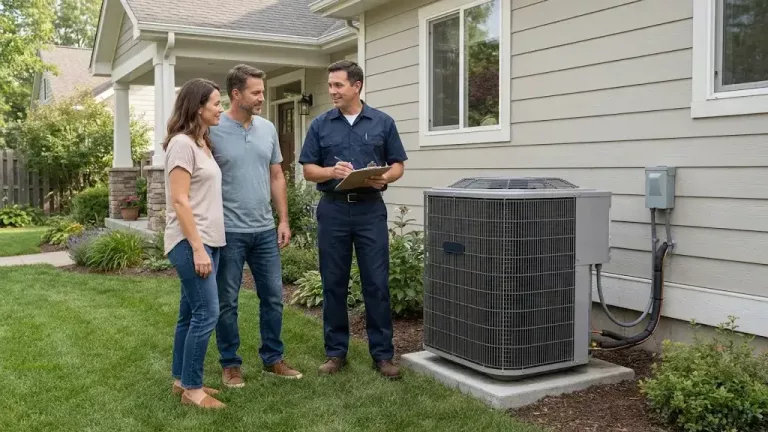
Selecting the right heating and cooling system for your house is very important. It will impact how comfortable you are in your home during high temperatures and what your energy costs will be.
Due to the variety of extreme weather conditions across the Emerald Coast, there are many factors to consider. Below is a guide to determine which HVAC system is best for you based on type, correct sizing, performance ratings, costs, and location.
Key Points
Want a system sized for your home, not just a guess?
Contact Us!Depending on the size of the house and layout, different HVAC systems may suit your property. For example, a two-storey house with a room added to the top of the garage and a small ranch will be different. Consider:
Consider which area of Panama City Beach you live in. Across the panhandle of Florida, the summers are very hot and humid, meaning that there is a long period of cooling required. The winters in Florida are generally mild. Therefore, dehumidification and efficient cooling should be prioritised over heating. It would typically be sensible to install a correctly sized heat pump or split system.
Depending on the situation in your home, you need to decide on a system. The most common options considered are:
These include an external air conditioner and an internal air handler/furnace to push air through the vents. If some rooms in your property consistently run warm, it may not be necessary to upgrade to a larger system; instead, check if the ducting and airflow are correct.
Heat Pumps provide cooling similarly to air conditioners, but in colder temperatures they reverse and pull heat from outside into the home. This makes it a great option for many homes in Florida, as only one unit is required, reducing the need for a furnace.
Dual-fuel systems
A combination of a heat pump and gas furnace. When it becomes more economical to heat with gas, the gas furnace will kick in. These are more common in colder regions.
Have one outdoor unit connected to one or more indoor units. Each indoor unit helps cool/heat a room or zoned area of the home. Ductless mini-splits are perfect for extending parts of a property, garages, conversions, or older buildings with no ducting.
All components are in an outdoor housing. These are commonly found on the roof or next to properties where there is no space for internal components.
| System | Best For | Heating Included? | Main Trade-Off |
| Central AC + furnace | Homes already set up for gas | Yes (furnace) | Two pieces of equipment to maintain |
| Heat pump | Most Florida homes | Yes | Less ideal in very cold climates |
| Dual-fuel | Cold winters | Yes (both) | Higher cost, rarely needed on the Gulf Coast |
| Ductless mini-split | Additions, no-duct homes | Yes (heat pump models) | Visible indoor units |
| Packaged | Limited space, some manufactured homes | Depends on model | Fewer options |
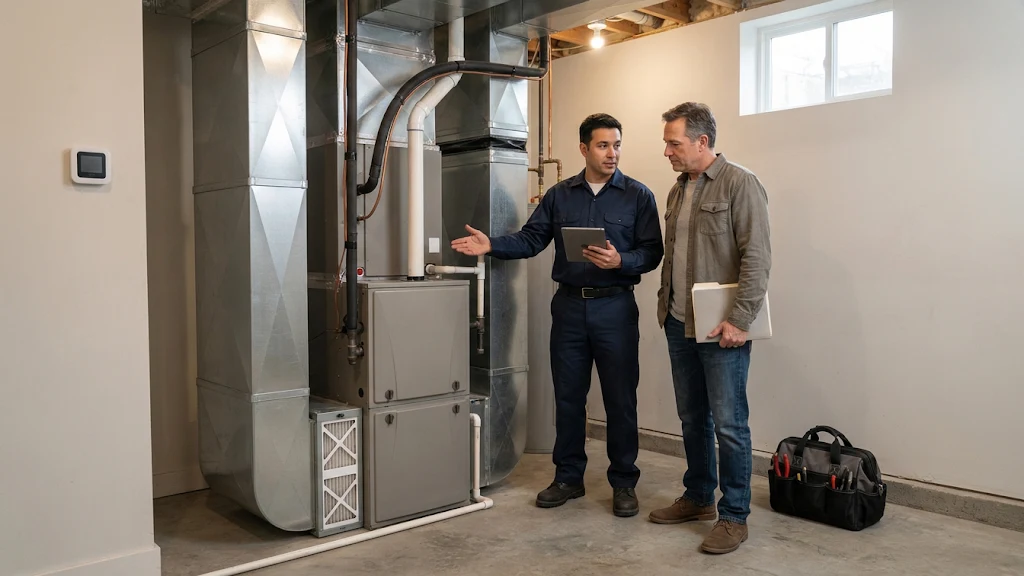
A larger system may seem better, but it may not perform well. If an air conditioner is too large for a home, it will switch off quickly. This means that not enough moisture is removed from the air (short cycling). This causes issues with short cycling and creates a damp feeling in the home. Components in the system will also wear out more quickly.
Correct sizing can be determined with a Manual J Calculation. This calculation measures:
Avoid using rule-of-thumb calculations (one tonne per 500 sq ft). Ask any contractors if they have performed a proper load calculation and ask for the data.
If unsure on the correct system size for your home, Arctic Air & Refrigeration can perform the calculation to find a suitable size for your home.
These ratings are useful for comparing correctly sized systems. Below is a list of what each of these ratings determines:
ENERGY STAR marks equipment that beats the federal minimums. Certified split-system heat pumps, for example, currently need about 15.2 SEER2 and 7.8 HSPF2, so check the criteria for your exact equipment category.
Although higher ratings mean less energy usage, the actual cost savings can vary greatly depending on many factors. These include: the efficiency of your current system, the settings on your thermostat, insulation levels, ductwork quality, and installation quality.
You’ll see these terms when comparing equipment. They describe how a system adjusts its cooling or heating output.
For most Florida homes, two-stage or variable-speed is worth the money. Longer run times dry the air, and that’s often the difference between a house that’s merely cool and one that feels comfortable.
Depending on the size of your house, type of equipment, state of existing ducting, and best HVAC companies, you should get 2-3 quotes to compare. Here are the important things to consider:
Operating costs: More efficient systems will have a higher initial cost but cheaper running costs.
Lifespan: Typically, central heating and cooling systems are expected to last 15-20 years. If located near the coast and poorly maintained, lifespan may be reduced.
Tax rebates: Tax rebates from the government, energy providers, and manufacturers in the form of discounts can change. Check the options available at purchase time.
Warranty: Parts warranties of 10 years are common from manufacturers if registered with them. Labour is typically much shorter (often only 1 year) however, some additional cover can be purchased to extend this.
Even with high-quality units, poor installation can lead to low performance. With good installation, even a mid-range unit will perform well. In fact, it is estimated by the EPA that over 50% of residential air conditioning units do not perform at the correct efficiency due to poor installation. This could occur due to incorrect refrigerant charge, incorrect airflow, leaking ductwork, and oversizing. (achrnews)
Ensure that your contractor is using accurate loading calculations. They should also have appropriate ductwork checks, appropriate licensing, insurance, a clearly defined scope of work (including model numbers), and good local reviews. Since 2010, Arctic Air & Refrigeration has provided HVAC services to Panama City Beach and the Emerald Coast. We ensure AC installation is to the highest standard we would expect.
Although an air conditioning unit may perform well in a dry area, it may not be the best choice for those living along the Gulf Coast. Here are three local factors worth keeping in mind.
All locations across the Emerald Coast have long cooling seasons and humid weather. For the majority of locations within Panama City Beach, Destin, Fort Walton Beach, Santa Rosa Beach, Miramar Beach, and surrounding areas, it is suitable to install an appropriately sized heat pump/central air conditioning unit. Where possible, 2-stage or variable speed units may be ideal. As running times are longer, humidity control is made easier.
But if you are in coastal locations (Panama City Beach, Destin, or Rosemary Beach), please check that the outside units are rated/protected for coastal use. As the air contains salt, corrosion may occur more quickly. If you are just slightly further inland, such as in Freeport, DeFuniak Springs, and parts of Okaloosa County, humidity control is still very important. However, salt exposure may be less than in coastal areas. As winters are mild, dual fuel units are rarely required.
Ductless units may still be a great option in new additions, converted garages and properties without suitable ducting.
Use this when comparing systems:
Make sure not to make these mistakes:
If a contractor can’t explain the recommendation or show what the installation covers, seek another estimate.
We can help homeowners select the best replacement system based on layout, cooling needs, and existing equipment in your home. This includes: overall system replacement, load calculations, maintenance plans, and improvements to air flow and indoor air quality. We can evaluate your current system and help you make realistic choices.
Depending on factors such as insulation, window amount, layout and climate. We recommend getting a Manual J calculation to ascertain the correct size.
Yes! As temperatures are mild in winter, a heat pump can be used for both heating and cooling, so a separate furnace is not necessary.
Most systems last between 15 and 20 years. Correct sizing, maintenance, and protection from coastal conditions can help achieve the upper limit of this range.
This depends. Usually, moving away from the minimum rating can be cost-effective in places with long cooling seasons. However, it may be difficult to justify the very highest ratings.
Generally yes. If both systems are old, matching systems will work as intended, and replacing at the same time is cheaper.
If you are adding an extension, have a garage, or have no ducts, it may be a good option. However, if there is ductwork within the house, a central system is generally easier.
The best system for your home may not need to be the most expensive or most efficient. It just needs the correct size for your home, compatible with the local climate, able to work with the ducting, and installed correctly.
If you need to replace or install HVAC in Panama City or along the Emerald Coast, contact Arctic Air & Refrigeration at (850) 276-0744. We can help you to choose from the options and find the best system for your house.


